Across more than twenty years in banking, I have watched the expectations placed on finance leaders widen steadily. The question used to be whether the numbers were right. Today it is also whether the numbers are being used well. Both questions now sit with the CFO.
The traditional responsibilities have not gone anywhere. CFOs still protect financial discipline, oversee reporting, manage liquidity and ensure that capital is used responsibly. But they are now also expected to shape strategy, test investment cases and guide decisions made under genuine uncertainty.
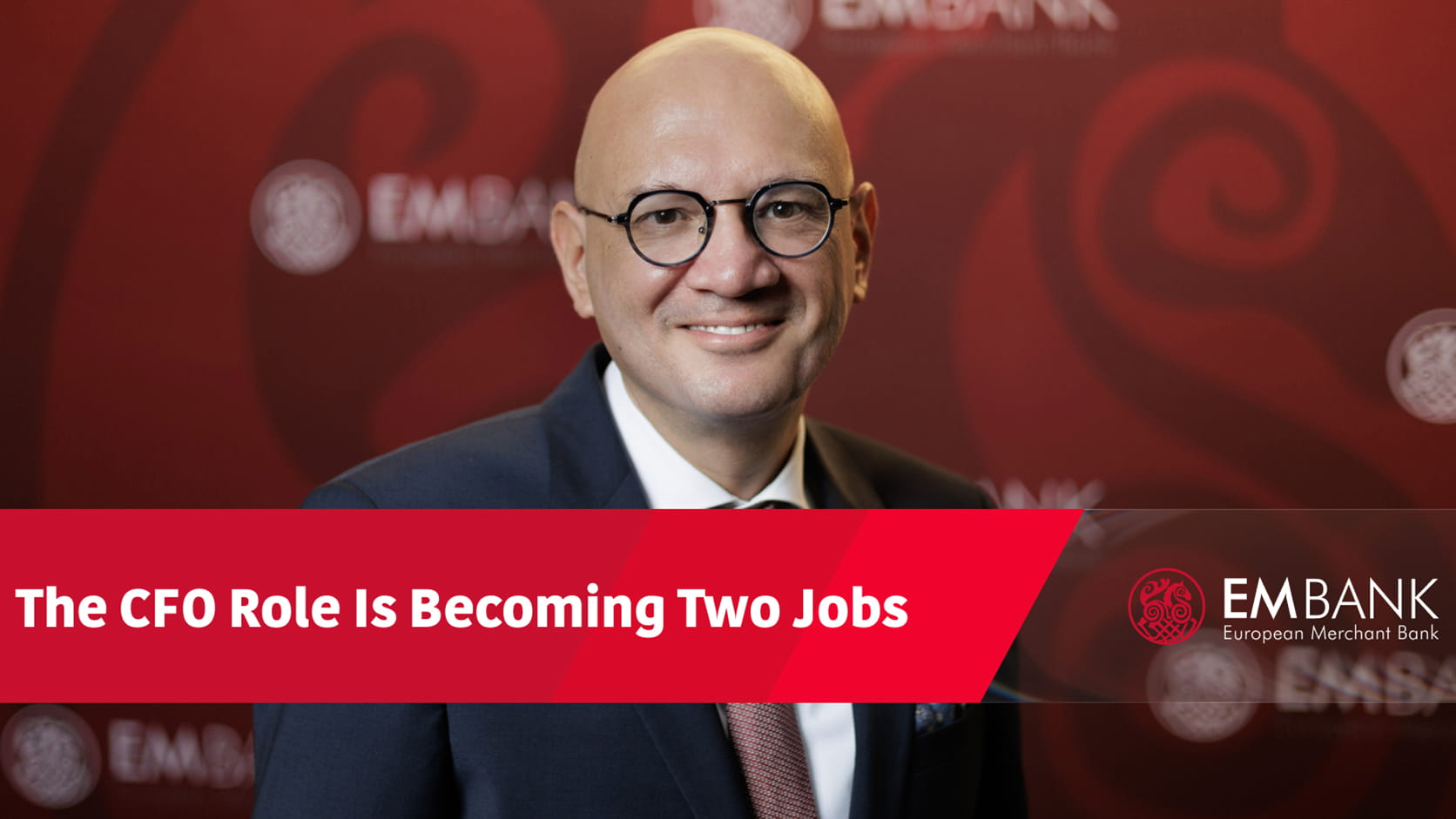
In practice, one role now carries two mandates.
Stewardship and Navigation
The first mandate is stewardship: accuracy, controls, compliance, liquidity and risk. Greater complexity makes this harder, not easier.
The second is strategic navigation: interpreting what is changing, setting priorities and advising management when the available information is incomplete.
The two do not sit comfortably together. Stewardship rewards precision, consistency and repeatability. Navigation rewards judgement, context and a willingness to commit before every fact is known. The CFO is asked to protect the organisation from avoidable risk while helping it take the right ones.
The Hard Part Is Switching
The difficulty is not the volume of work. It is the constant switch between two ways of thinking.
A morning spent on reporting accuracy or a liquidity position can be followed by an afternoon debating a technology investment or a growth plan. The first demands that nothing be left to interpretation. The second demands comfort with it.
The strongest finance leaders move between these modes without letting either erode the other. They do not let control instincts stifle strategic debate, and they do not let strategic enthusiasm loosen discipline.
The Finance Team Has to Change Too
No CFO can carry both mandates alone, which is why the shift is also reshaping the wider finance function.
As reporting and routine analysis become more automated, finance teams are expected to explain what the numbers mean, how they connect to operations and where they signal a problem or an opportunity. That requires people who understand commercial priorities, operational constraints and technology, not only accounting.
The more capable the team becomes at interpretation, the more of the strategic load it can share.
AI Raises the Value of Judgement
AI will absorb much of the work that once consumed finance teams: reconciliations, forecasts, monitoring and first-pass analysis.
That moves the bottleneck. When analysis becomes cheap, the scarce skill is deciding which output deserves attention, which assumption is fragile and how much confidence a conclusion really warrants. Accountability does not move to the model. The CFO still owns the decision and still has to explain its uncertainty to the board.
The CFO of the future will spend less time producing answers and more time deciding which answers matter.
Don’t Split the Role. Design for It.
If the role now holds two jobs, the instinct may be to divide it. In most organisations that would be a mistake. Stewardship and strategy inform each other, and the person who understands where the numbers come from is often best placed to say what they mean.
The better answer is to build the finance function around both mandates:
- Strong deputies who own reporting, control and compliance, so the CFO is not the last line of defence on every number.
- Finance business partners embedded in the business and able to carry analysis into operational decisions.
- Protected time for longer-term thinking, because operational demands are always more urgent and will otherwise crowd it out.
The CFO role is becoming two jobs. The organisations that get the most from their finance leaders will be those that stop expecting one person to do both unaided, and start designing the function to support each.